Glokore OralCare Plus Review 2026
★★★★★ Rated 4.8/5 by verified buyers
Oral hygiene is the practice of keeping one’s oral cavity clean and free of disease and other problems, such as bad breath. The Glokore OralCare Plus adds a few minutes of red and near-infrared light to that routine, hands-free.
Ships from the US · 60-day guarantee
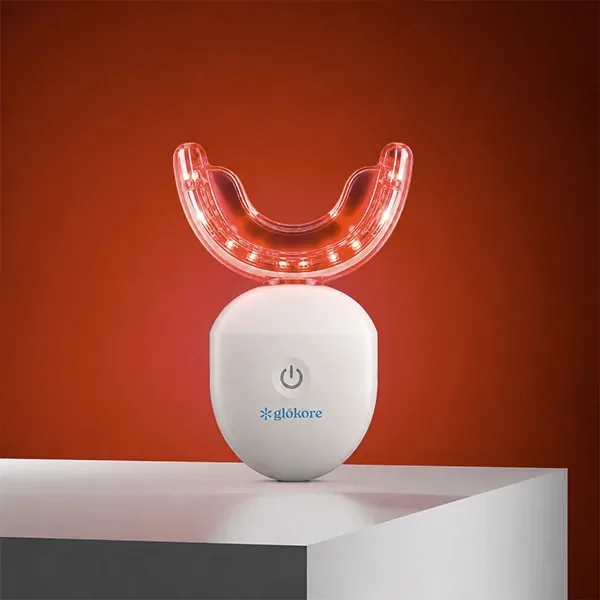
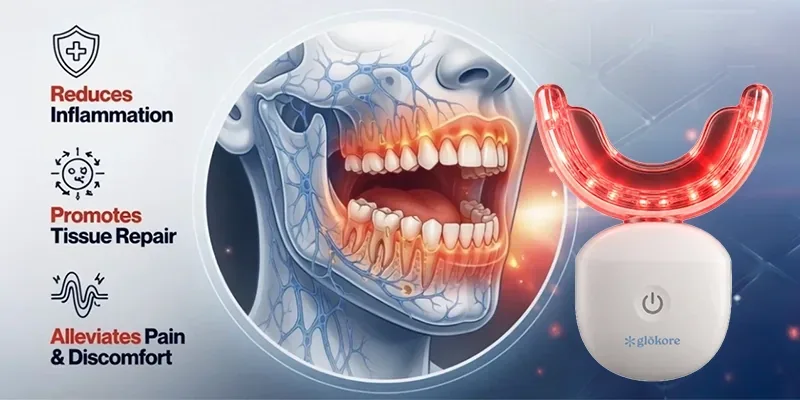
Low-level light therapy, or photobiomodulation, applies low-power lasers or light-emitting diodes to the surface of the body without damaging tissue. The light sources expose cells to low levels of red and near infrared light.
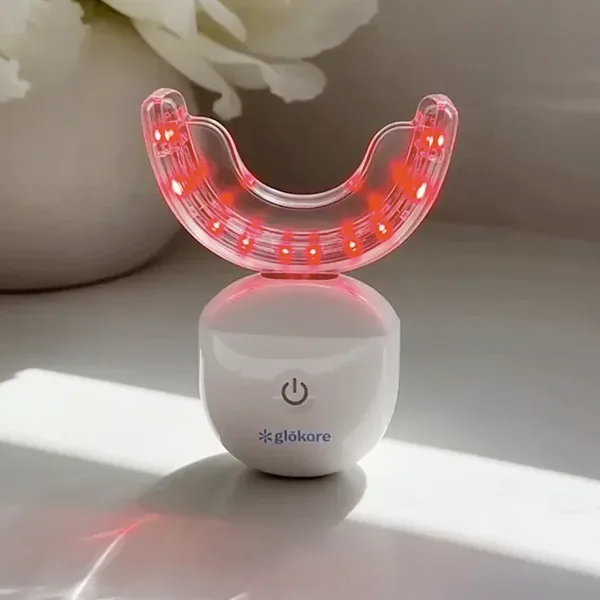
The Glokore OralCare Plus brings that kind of light to the mouth. It is a mouthpiece with red and near-infrared LEDs that sits over the teeth and gums while you get on with your day.
It needs no gels, no peroxide trays and no setup.
| Product | Glokore OralCare Plus, a hands-free LED oral device |
| Light | Red and near-infrared LEDs |
| Use | A few minutes a day, hands-free |
| Gels or trays | None needed, no peroxide |
| Best for | Gum comfort, a fresher-feeling mouth, daily oral wellness |
| Price | From $59.99 each in the 3-pack, $79.99 for one |
| Guarantee | 60 days, money back |
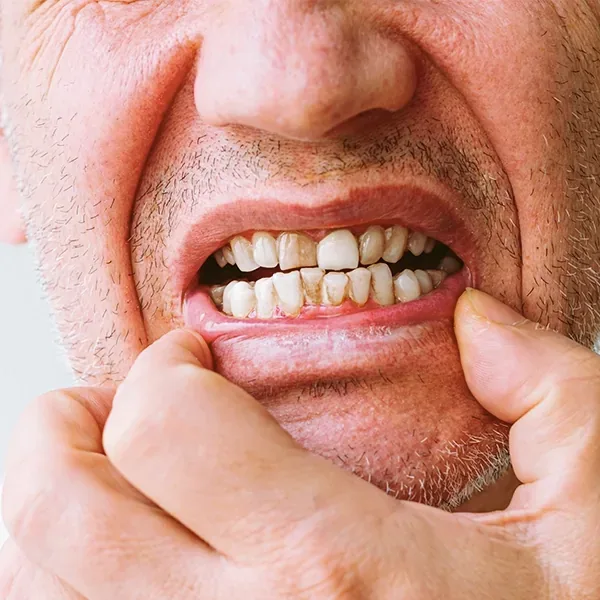
Everyone’s mouth is full of bacteria. Good oral hygiene can stop bacteria from causing gingivitis, the first stage of gum disease.
Gingivitis is the earliest stage of gum disease (periodontal disease). It develops when plaque, tartar and bacteria build up on your teeth, causing red, swollen, bleeding gums.
Gingivitis is your body’s inflammatory response to plaque and tartar on your teeth. When plaque and tartar remain on your teeth for too long, your gums become irritated, red and swollen.
The earlier you catch gum disease, the more you can manage it. You must take good care of your teeth and gums between office visits.
Plaque forms on your teeth. Plaque is a sticky film that has no color. It’s mainly made up of bacteria that form on your teeth after eating starches and sugars in food. Plaque needs to be removed every day because it forms quickly.
Plaque turns into tartar. Plaque that stays on your teeth can harden under your gumline into tartar. Tartar makes plaque harder to remove, creates a protective shield for bacteria and irritates the gumline. You need professional dental cleaning to remove tartar.
Gingiva becomes irritated and swells. The gingiva is the part of your gum around the base of your teeth. The longer that plaque and tartar remain on your teeth, the more they irritate the gingiva.
Dental plaque is commonly found between the teeth, on the front of teeth, behind teeth, on chewing surfaces, along the gumline, or below the gumline.
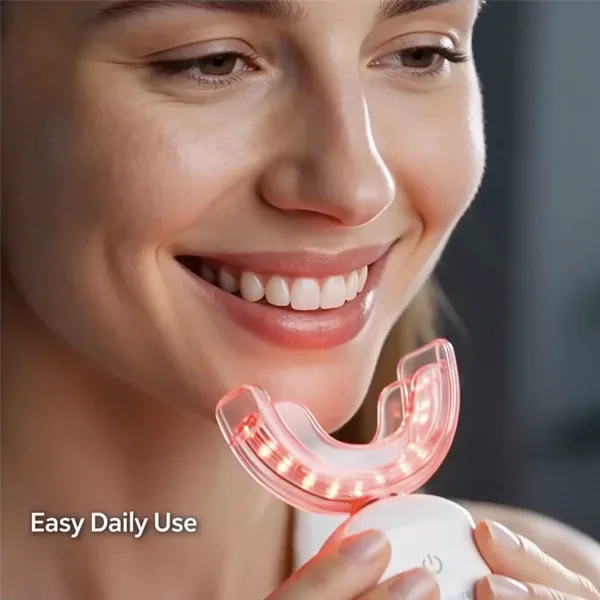
Tooth brushing is the most common preventive healthcare activity, but tooth and gum disease remain high, since lay people clean at most 40% of their tooth margins at the gum line. Videos show that even when asked to brush their best, they do not know how to clean effectively.
Tooth brushing can remove plaque up to one millimeter below the gum line, and each person has a habitual brushing method, so more frequent brushing does not cover additional parts of the teeth or mouth.
A toothbrush cannot reach between the teeth and therefore only removes about 50% of plaque from the surface of the teeth. Cleaning between the teeth is as important as tooth brushing.
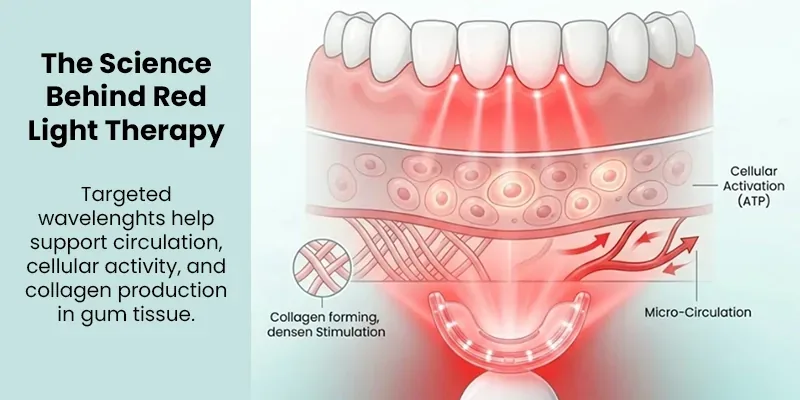
The light from the Glokore OralCare Plus covers the whole gumline at once, front and back.

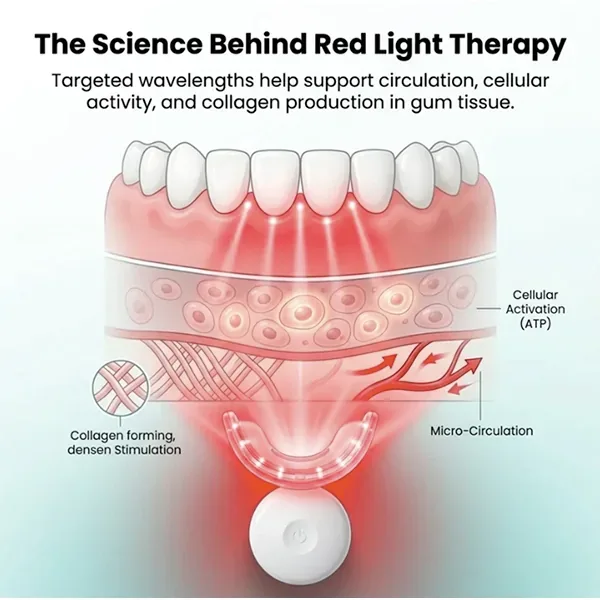
Light must be absorbed by a chemical substance in order for a photochemical reaction to take place. In the generally accepted theory that substance is the respiratory enzyme cytochrome c oxidase, which is involved in the electron transport chain in mitochondria.
The penetration depth of LED light into tissue increases with increasing wavelength from the ultraviolet to the visible light range. Red light reaches the gum surface, and near-infrared goes a little deeper.
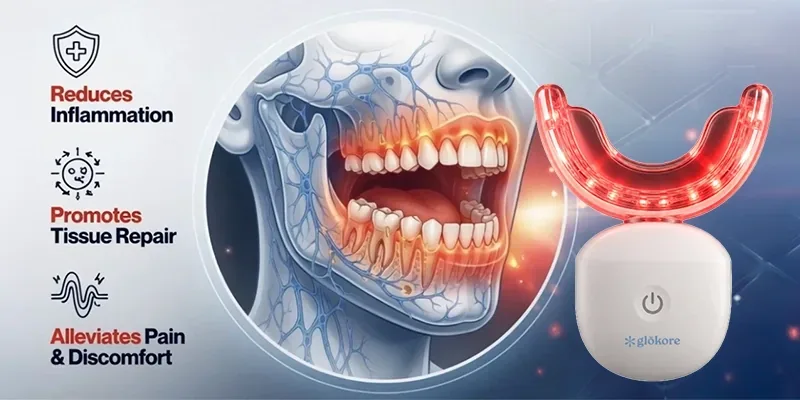
The Glokore OralCare Plus pairs both wavelengths and is designed to support calmer, comfortable gums, less sensitivity and a fresher-feeling mouth with daily use.
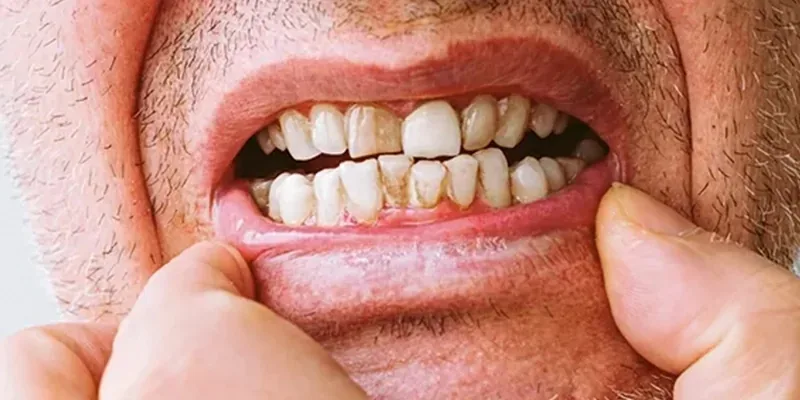
Bad breath, also known as halitosis, is a symptom in which a noticeably unpleasant breath odour is present. In about 90% of genuine cases, the origin of the odour is in the mouth itself.
The most common causes are odour-producing biofilm on the back of the tongue or other areas of the mouth due to poor oral hygiene.
Initial efforts may include tongue cleaning, mouthwash, and flossing. Bad breath may be transient, often disappearing following eating, drinking, tooth brushing, flossing, or rinsing.
Many buyers say the Glokore OralCare Plus leaves their mouth feeling fresher in the morning.
The intensity of bad breath may differ during the day, due to eating certain foods such as garlic, onions, meat, fish, and cheese, smoking, and alcohol consumption. Since the mouth is exposed to less oxygen and is inactive during the night, the odour is usually worse upon awakening (“morning breath”).
Concern about bad breath is the third most common reason people seek dental care, after tooth decay and gum disease. People in the United States spend more than $1 billion per year on mouthwash.
Dentin hypersensitivity is dental pain which is sharp in character and of short duration, arising from exposed dentin surfaces in response to stimuli, typically thermal, evaporative, tactile, osmotic or chemical.
The most common trigger is cold, with 75% of people with hypersensitivity reporting pain upon application of a cold stimulus.
The most commonly accepted model is the hydrodynamic or fluid movement theory. When the exposed dentine surface is subjected to thermal, chemical, tactile or evaporative stimuli, the flow of the fluid within the tubules will be increased.
Unlike whitening strips, the light has no peroxide, so it is gentle on teeth that feel sensitive.
A session takes just a few minutes.
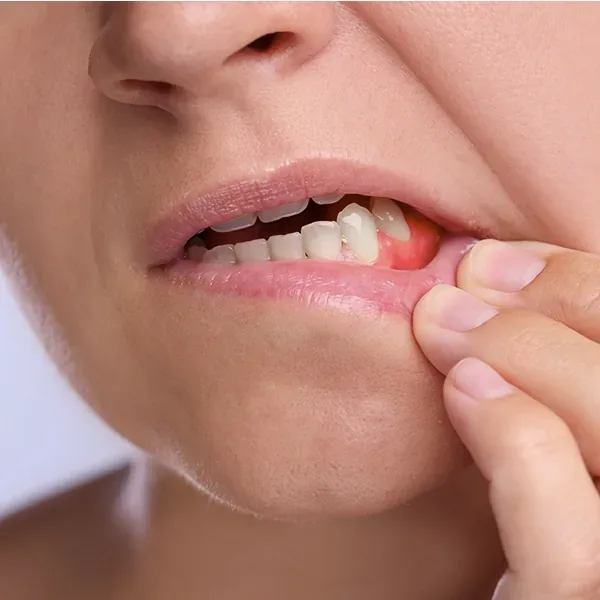
Brush and floss as usual, then rinse the mouthpiece.
Place it over your teeth and switch on the light.
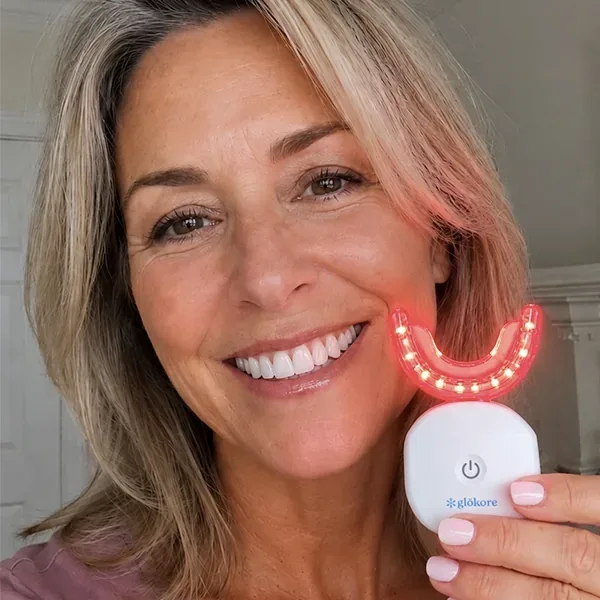
Go hands-free for a few minutes while you get ready.
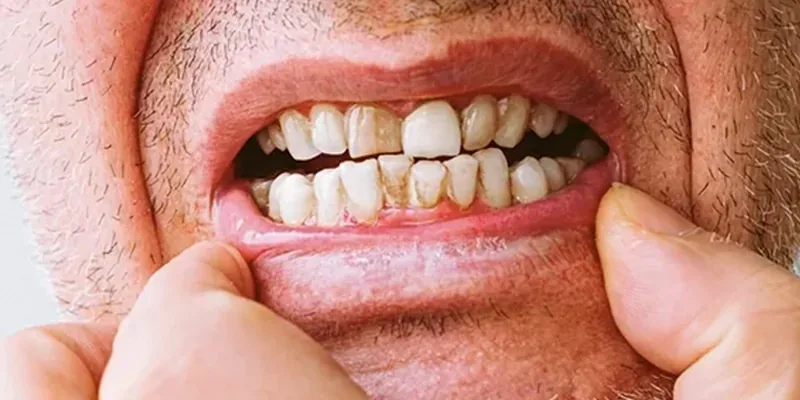
The most common cause of gingivitis is not keeping your teeth and gums clean and healthy. Good oral health habits, such as brushing at least twice a day, flossing daily and getting regular dental checkups, can help prevent and reverse gingivitis.
General guidelines for adults suggest brushing at least twice a day with a fluoridated toothpaste: brushing before going to sleep at night and after breakfast in the morning.
Sometimes white or straight teeth are associated with oral hygiene. However, a hygienic mouth can have stained teeth or crooked teeth.
Add the light after the evening brush and it becomes part of the same habit.

Dental plaque is considered a biofilm adhered to the tooth surface. It is a meticulously formed microbial community. About 1000 different bacterial species have been recognized using modern techniques.
Supragingival biofilm is dental plaque that forms above the gums, and is the first kind of plaque to form after brushing teeth. It commonly forms in between the teeth, in the pits and grooves of the teeth, and along the gums.
Subgingival biofilm is plaque that is located under the gums. It occurs after the formation of the supragingival biofilm by a downward growth of the bacteria from above the gums to below. As this plaque attaches in a pocket under the gums, it will thrive if not removed.
Unlike other parts of the body, tooth surfaces are uniquely hard and non-shedding. Therefore, the warm and moist environment of the mouth makes a good environment for growth and development of dental plaque.

Dental floss is a cord of thin filaments, typically made of nylon or silk, used in interdental cleaning to remove food and dental plaque from between teeth or places a toothbrush has difficulty reaching.
The type of floss used is a personal preference; however, without proper technique it may not be effective. For upper teeth grasp the floss with thumb and index finger, for lower teeth with both index fingers. Ensure that a length of roughly an inch is left between the fingers.
Position the floss in such a way that it becomes securely wrapped around the interdental surface of the tooth in a C shape.
Interdental brushes come in a range of color-coded sizes. They consist of a handle with a piece of wire covered in tapered bristles. Studies indicate that interdental brushes are equally or more effective than floss when removing plaque.

Bacteria survive on toothbrushes over 24 hours in moist conditions, less so when air-dried. Brushes can be decontaminated by soaking for 20 minutes in mouthwash.
Mouthwashes reduce plaque by an average of 35% if they contain essential oils or chlorhexidine gluconate. Side effects of mouthwashes with essential oils and alcohol include poor taste and oral irritation.
When asked to brush to the best of their abilities, young adults brushed longer, but did not cover any additional parts of their mouths. They brushed especially long on the grinding surfaces of back teeth.
A light session needs no rinse and leaves no taste, so it is easy to add on top of the brush and the floss.
The importance of the role of the oral microbiome in dental health has been increasingly recognized. Data from human oral microbiology research shows that a friendly microflora can switch to a harmful flora through complex changes in their environment. These changes are driven by the host rather than the bacteria.
Tooth decay is the most common global disease. Over 80% of cavities occur inside fissures in teeth where brushing cannot reach food left trapped after eating and saliva and fluoride have no access to neutralize acid.
Practices such as healthy eating and managing blood sugar if you have diabetes are also important to supporting gum health.
Since before recorded history, a variety of oral hygiene measures have been used for teeth cleaning. Excavations throughout the world have found chew sticks, tree twigs, bird feathers, animal bones and porcupine quills.
Indian medicine (Ayurveda) has used the neem tree, or daatun, and its products to create teeth cleaning twigs and similar products.
Teeth cleaning is the removal of dental plaque and tartar from teeth to prevent cavities, gingivitis, gum disease, and tooth decay. Severe gum disease causes at least one-third of adult tooth loss.
Buyers rate it 4.8 out of 5. A few of their comments:

Alice M.
Verified Buyer · ★★★★★
I use it every night after brushing. My gums look less red and they don’t feel tender when I floss.

Chris T.
Verified Buyer · ★★★★★
Hands-free, so I wear it while I shave. My mouth feels fresher in the morning.

Jen P.
Verified Buyer · ★★★★★
Cold drinks used to bother me. After a few weeks they bother me a lot less.

Share with a partner
$159.99 $69.99/each
SAVE 56%
Total $139.98
Get 2 & Save 56%One to keep, two to share
$159.99 $59.99/each
SAVE 62%
Total $179.97
Get 3 & Save 62%
Every order is covered for 60 days. Contact support@glokore.com or 1 (888) 884-2291, then send it back in its original packaging for a refund or replacement, less shipping and handling.
Just a few minutes a day.
Yes. It is an add-on to brushing and flossing.
No. It uses light only.
Yes. It sits in your mouth while you do other things.
Yes, 60 days, money back.

Red and near-infrared light for the whole gumline, in a few hands-free minutes a day. It sits easily beside your brush and floss.
The 3-pack brings it down to $59.99 per device.
Ships from the US